

Headphone repair shop software for earbuds and over-ears
Earbuds and headphones have a serial number, not an IMEI. SlickCell books each pair in by serial, keeps noise cancelling and how it charges on the stock record, and sells refurbished pairs as their own units.
A charging case that will not charge, and a pair traded in
SlickCell is headphone repair shop software for shops that fix earbuds and headphones alongside phones, tablets and laptops. Earbuds & Headphones is its own device type, with more than 450 models to pick from: earbuds, over-ears, studio headphones and office headsets. The model list tells apart the variants that matter at the bench, such as AirPods 4 with and without Active Noise Cancellation, and AirPods Pro (2nd generation) before and after USB-C. The stock and trade-in records carry the fields that tell two pairs apart: connectivity, noise cancelling and how the pair charges. Earbuds have no IMEI, so they are booked in by serial number, in the one field that takes a serial or an IMEI. A battery or a charging case is quoted and approved on one ticket, and the part used comes off stock. A refurbished pair you sell is its own stock unit with its own serial, cost and price.
Monday morning a pair of AirPods Pro arrives with a case that will not charge. It is booked in as Earbuds & Headphones, brand Apple, and the model is picked from the list: AirPods Pro (2nd generation, USB-C), not the earlier Lightning version. The serial goes in as printed, and what came in with the pair (both buds, the case, no cable) goes in the condition notes.
The case repair is quoted before any work starts, and the ticket sits at Quote Sent until the customer agrees. The replacement case is not on the shelf, so the job moves to Awaiting Parts, a status with its own date. When the repair is done, the part used comes off stock and onto the job.
That afternoon a customer trades in a pair of over-ear headphones. They go on a trade-in record with the device type set, the serial in the IMEI / Serial field, and connectivity, noise cancelling and charging filled in. Added to stock, the pair becomes its own unit, costed at what you paid plus any refurbishment, and it sells later at the till, found by its serial.
The modules that made it happen
Booked by serial, sold as a unit
The jobs an audio bench sees every week: batteries, charging cases and charging ports, ear cushions and headbands. Each one passes through the same states on one ticket.
- 01Booked in by serialType, brand and model from the audio list; the serial as printed.
- 02QuotedPriced before the work; the ticket waits at Quote Sent.
- 03Awaiting partsA status with a date, not a note on the side.
- 04RepairedThe battery or case used comes off stock onto the job.
- 05CollectedCompleted, paid and handed back, with the history kept.
- 06Refurbished and soldA traded-in pair becomes a stock unit, sold by its serial.
The screens a pair goes through
Real screens from the product. A pair of earbuds uses the same records as every other device.

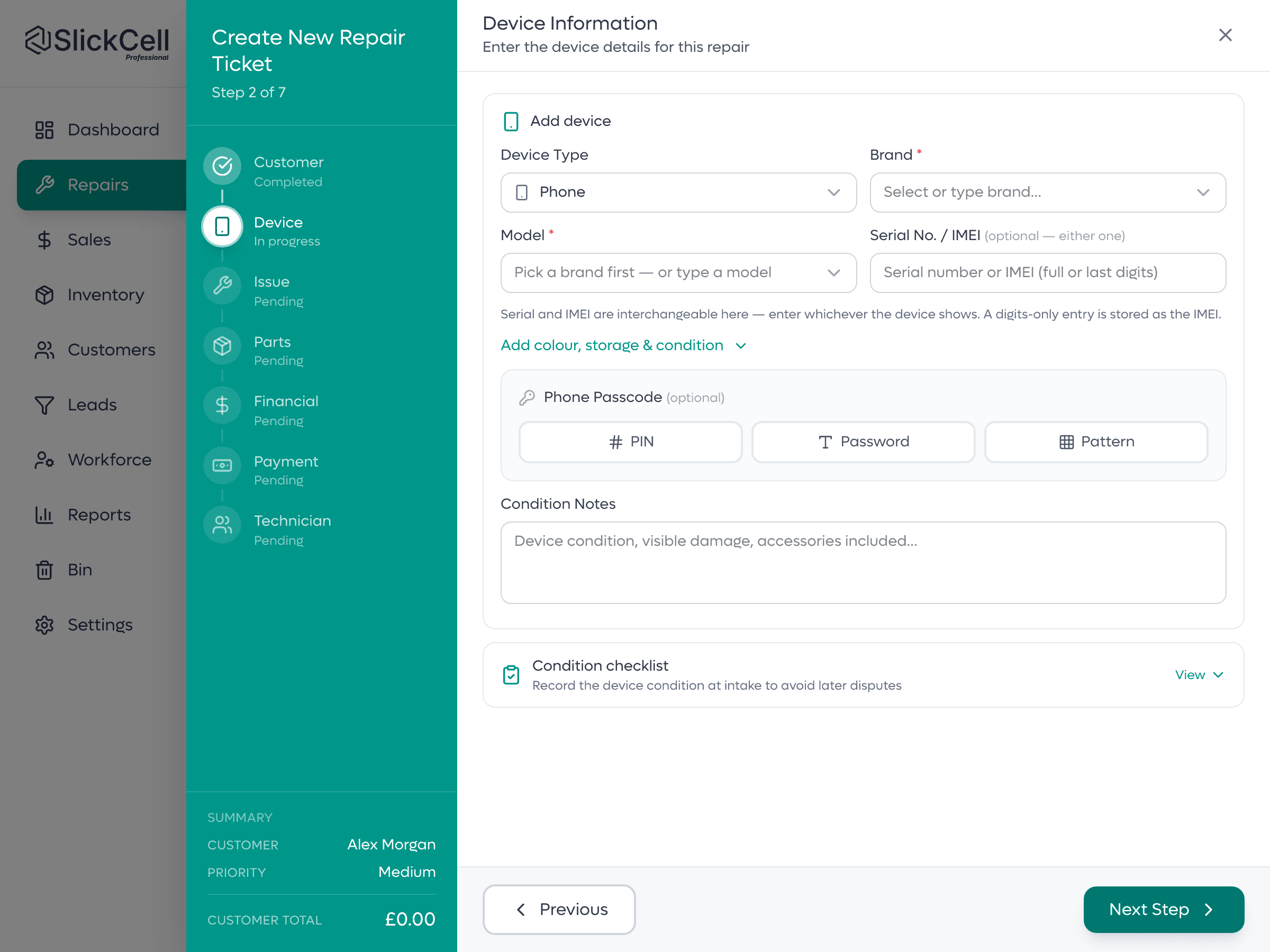
Booking in, by serial
Step two of a new ticket. Choose Earbuds & Headphones as the device type and the brand and model lists offer audio makers and models only. The serial goes in the one field beside them.

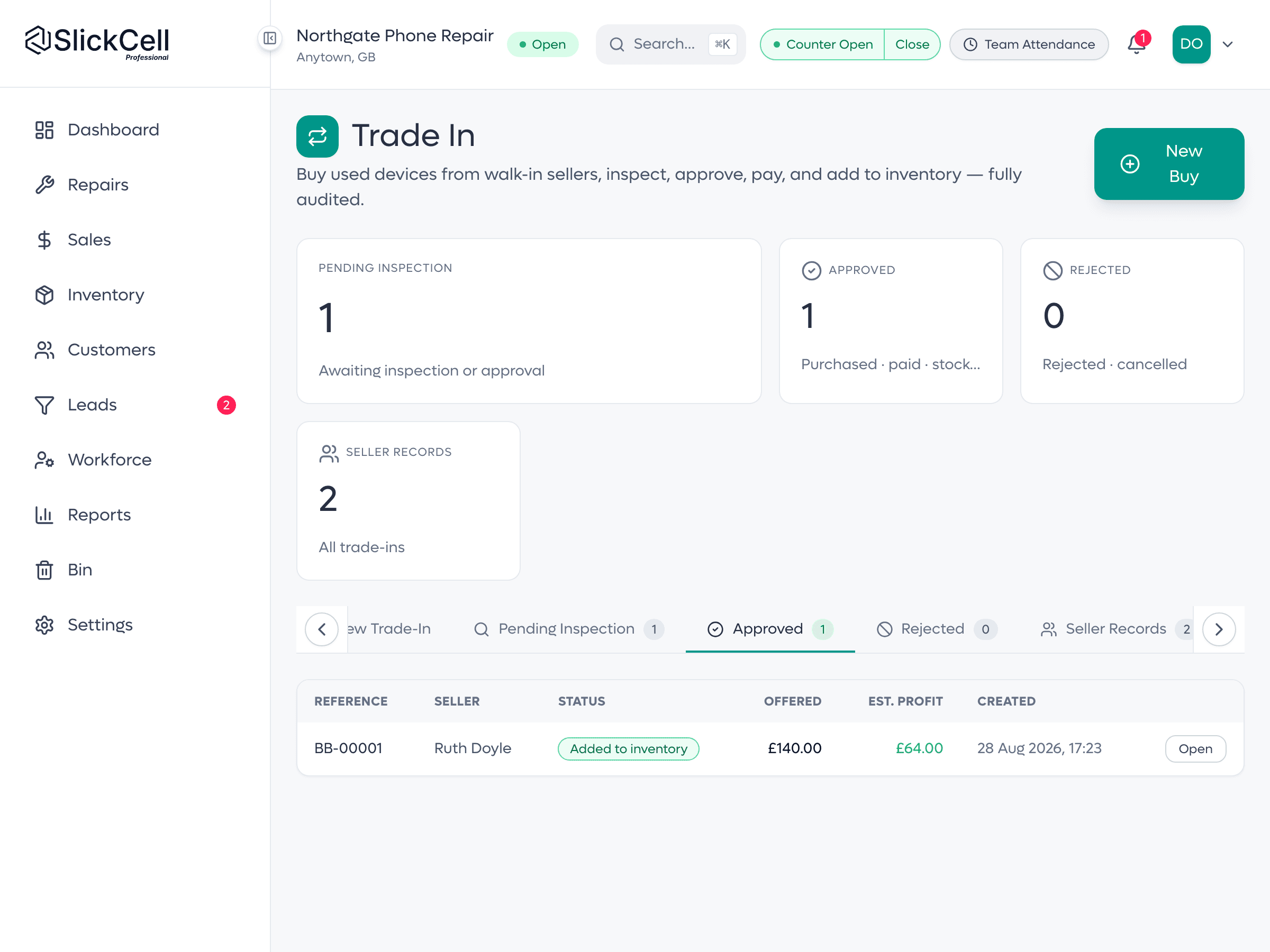
A trade-in, through to stock
Each buy is inspected, approved, paid and added to stock. With the device type set to Earbuds & Headphones, the form asks for connectivity, noise cancelling and charging.
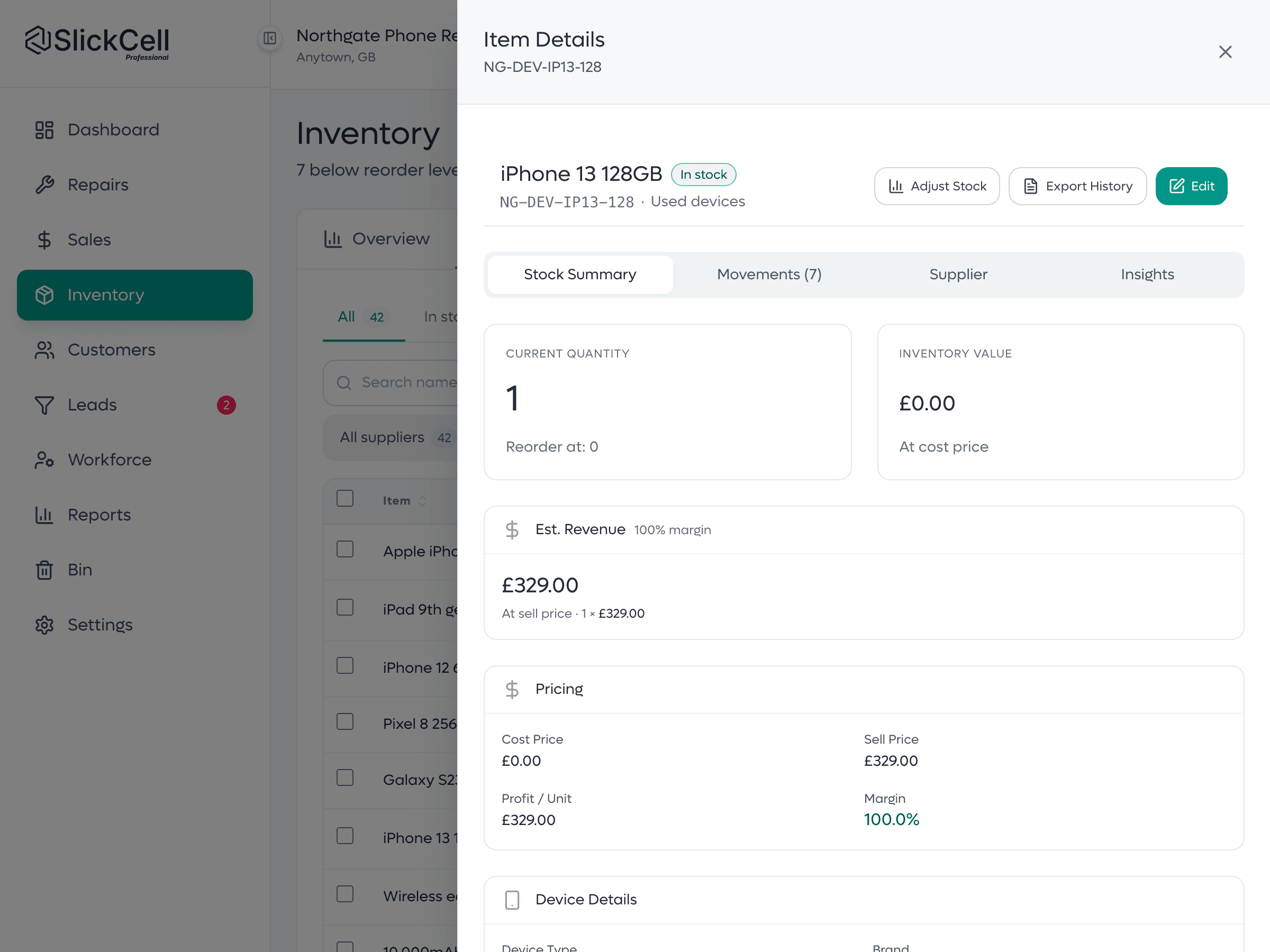
One unit, its own cost and price
A stock item and the units under it, each with its own serial, cost and selling price, and the movements that brought it in and sent it out.
What changes
What an earbud and headphone shop notices after the first month.
- The right model on the ticket
- AirPods Pro before and after USB-C are two models in the list, so the ticket names the pair on the bench.
- A serial on every pair
- Booked in by serial, so the pair that leaves is the pair that arrived.
- Audio stock in one place
- An audio stock item defaults to the category Audio, and the stock list filters on it.
- Quotes agreed first
- The quote the customer agreed is on the ticket before the case is opened.
- Trade-ins costed
- A pair you buy in is a unit at what you paid, so its margin is real when it sells.
Built for the bench and the counter
Earbuds & Headphones
Its own device type, with more than 450 models and audio makers only.
Every variant in the list
AirPods 4 with and without noise cancelling, AirPods Pro before and after USB-C: separate models.
Noise cancelling and charging
Connectivity, noise cancelling and charging type on the stock and trade-in record.
Repairs
One ticket per job, from booked in to collected, with the quote on it.
Awaiting parts
A real status with a date, so a job waiting on a case is visible.
Parts by quantity
Batteries, cushions and cases counted; pairs for sale tracked one by one.
Trade-ins
Buy a pair in with its serial and specs, then add it to stock at cost.
A till for the counter
Repairs, accessories and refurbished pairs on one sale, split tender.
What earbud and headphone repairers ask
The questions shops ask before they switch, answered straight.
Yes. Earbuds and headphones are their own device type, and their stock and trade-in records carry connectivity, noise cancelling and the charging type, such as USB-C or MagSafe. The model comes from an audio list that keeps variants apart, so AirPods Pro before and after USB-C are two models.
Yes. Every device is its own record with its own IMEI or serial number, cost, condition, selling price and history. A phone is usually tracked by IMEI; a laptop, console, tablet or smartwatch by its serial number. Both are free text, so a partial or unusual reference from older stock is accepted.
Yes. Phones, tablets, smartwatches, laptops, desktops and all-in-ones, earbuds and headphones, and games consoles are each a device type with its own brand list and spec fields, and anything else goes under Other. A repair ticket, a stock unit and a trade-in work the same way for every type.
Starter is £39 a month, Professional £59 and Supplier Pro £99, all excluding VAT, or ten times the monthly price for a year. Every feature is on every plan; plans differ by team size, locations, discount rules and support. Every plan starts with a fourteen-day free trial with no card.
No. You create an account and the fourteen-day trial starts on the plan you choose, with every feature switched on. A card is only asked for when you decide to pay, from the billing settings.
Bring us a pair from your bench
A charging case waiting on a part, and a pair traded in. We will run both end to end on your own workflow.